
Multi-screen laptops have been part of the tech landscape for years—devices like the Lenovo ThinkPad W700DS introduced the concept with a sliding secondary display long before portable USB monitors became common gear for road warriors. But now, a new device called the SZBox DSX156 is pushing the envelope further by offering a dual-screen setup in a surprisingly compact package. Unlike bulkier designs like the Asus Zephyrus Duo or Lenovo’s ThinkBook Plus variants, which typically lean toward workstation-class sizing and weight, the DSX156 aims to bring dual-screen functionality to a lightweight, traditionally sized laptop body.
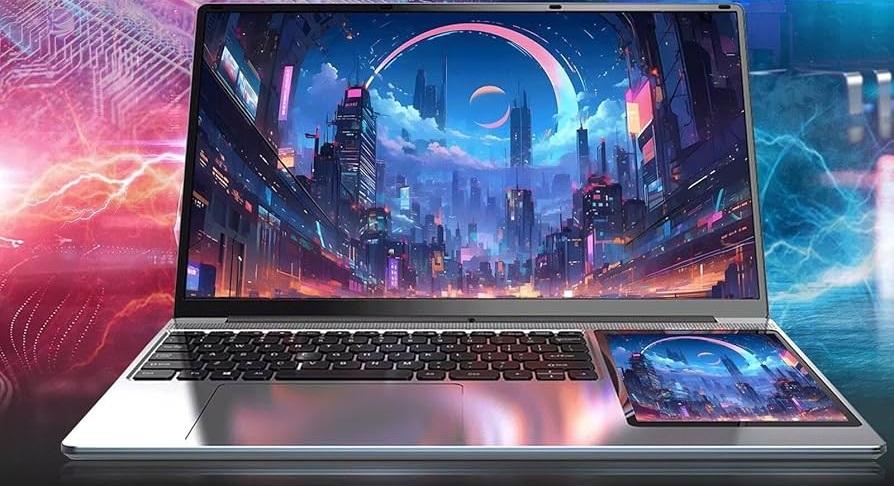
The primary display is a standard 15.6-inch 1080p panel, but what makes this model stand out is a 7-inch 1280×800 touchscreen embedded just to the left of the keyboard. It’s a clever layout for touch-friendly tools, shortcuts, or auxiliary apps, particularly for creatives or multitaskers. Despite its compact size and light 1.6-kilogram (3.53-pound) weight, the DSX156 isn’t without its compromises. One of the most notable concerns involves its layout: based on standard keyboard and screen dimensions, the laptop’s chassis width doesn’t seem to accommodate a full-sized ANSI keyboard alongside the second display—suggesting a heavily compressed keyboard design that could hinder comfort and usability.
Beyond the physical design, hardware limitations raise further red flags. The DSX156 is powered by an Intel N100 processor, a low-end chip more commonly found in basic productivity machines. It also includes only a single DDR4 RAM slot, limiting performance headroom—especially when driving two screens under Windows 11. The listed 5,400mAh battery is also suspiciously small, comparable to a smartphone cell rather than a proper laptop battery, although it may actually refer to a 54 watt-hour capacity instead. The price, currently listed at $425.12 on AliExpress, might seem enticing at first—but that figure doesn’t include memory, storage, or an operating system.
Nevertheless, the DSX156 is an intriguing proof of concept. Its existence shows that smaller, lighter laptops with integrated secondary displays are possible, even if trade-offs must be made. For manufacturers looking to differentiate themselves in a saturated laptop market, designs like this could serve as a creative blueprint for future innovation—assuming they can resolve some of the practicality concerns.