
Dolby Vision has long been a favorite HDR format for movie buffs and streaming fans because of its ability to boost contrast and make images leap off the screen. Yet, despite its strengths, one of the most consistent complaints has been that Dolby Vision often makes content appear too dark. The problem stems from the gap between how video professionals create content and how we actually consume it. Studios rely on precisely calibrated monitors in tightly controlled lighting conditions, but viewers at home watch on a wide mix of TVs—OLED, QLED, LED LCD—in rooms that range from pitch-black home theaters to brightly lit kitchens. This mismatch can leave audiences struggling to see crucial details in dark scenes.
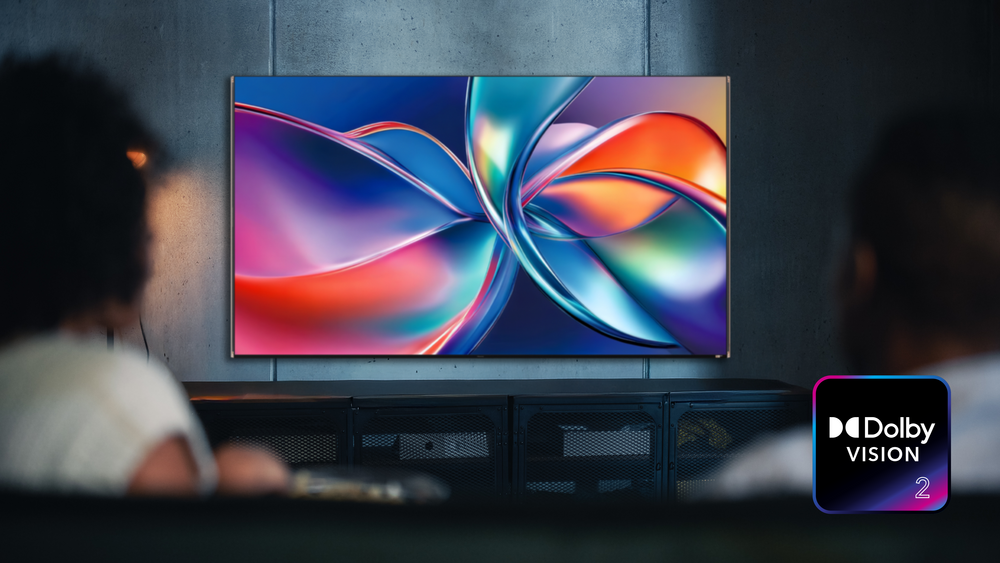
That’s where Dolby Vision 2 comes in. Announced at IFA in Berlin, the next-generation HDR format uses AI-powered tools to adapt visuals in real time, tailoring them not just to the capabilities of your TV but also to the ambient light in your viewing environment. Dolby is calling this “bi-directional tone mapping,” a two-way approach that ensures images are no longer treated with a one-size-fits-all grading process. Instead, Dolby Vision 2 works to deliver a personalized HDR experience that adjusts to where you’re watching, whether it’s on a cutting-edge OLED in a dim room or an LCD set in broad daylight.
Of course, the rollout comes with some caveats. Dolby Vision 2 won’t be a software update—it requires new TVs with the upgraded circuitry built in. Hisense is the first brand to commit, with Dolby Vision 2-enabled sets slated to launch later, while on the content side, CANAL+ is the first studio to pledge support for its movies, shows, and even live sports broadcasts. If adoption grows, more brands and streaming platforms are expected to follow.
Among the headline features are Precision Black, which embeds creator-side ambient light conditions into the HDR stream to help match home playback to the original studio intent, and Light Sense, which further tailors the visuals by analyzing the lighting conditions in your own living room. Combined under Dolby’s new Content Intelligence suite, these tools are designed to solve the “too dark” problem once and for all. Dolby Vision 2 also adds Authentic Motion, a feature that goes beyond HDR brightness and color to tackle motion-related issues like judder, promising smoother playback across different types of content. Together, these innovations aim to make Dolby Vision 2 the most adaptable and viewer-friendly HDR format yet.