
The question of whether 8GB of VRAM is still enough for modern gaming has become increasingly pressing. While this amount was considered the sweet spot for years, the latest wave of demanding titles—such as Borderlands 4—are starting to push mid-range systems to their limits. For smooth performance in new releases at higher settings, 16GB of VRAM appears to be fast solidifying as the new standard. That’s why fresh speculation around Intel’s Battlemage lineup is drawing attention, as it looks like a new 16GB card could be right around the corner.
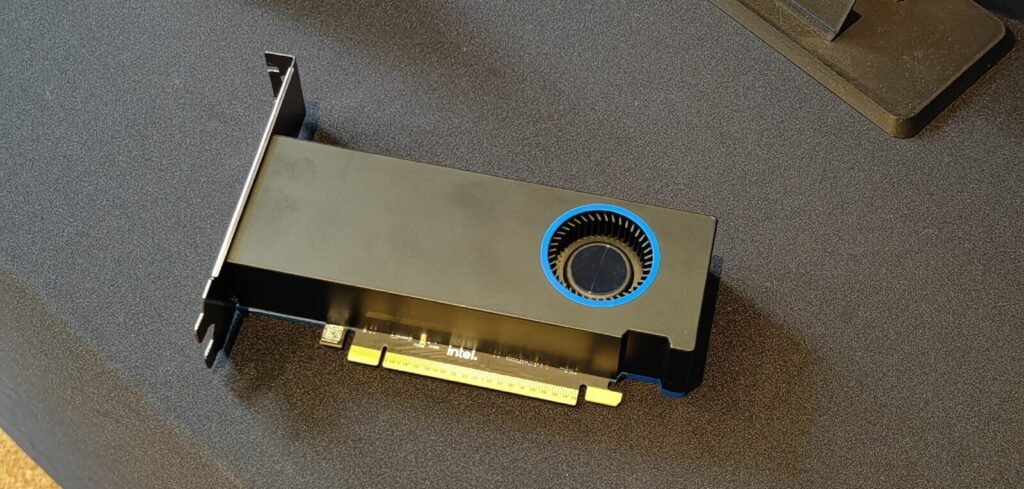
Evidence for this comes from a boot log shared by hardware enthusiast Tomasz Gawroński on Twitter (via VideoCardz), where a mysterious “BATTLEMAGE e221” identifier appeared. That string matches up with earlier rumors pointing to a potential Arc B770 GPU, reportedly featuring the BMG-G31 processor paired with 16GB of video RAM. Such a configuration would give Intel a much-needed higher-end option, especially in a landscape where Nvidia and AMD are already entrenched with their own 16GB models. Given Intel’s focus on affordability, this card could deliver higher VRAM capacity without the sky-high pricing that dominates the enthusiast tier.
Currently, Intel’s second-generation Battlemage lineup only consists of two discrete desktop GPUs, the Arc B570 and B580. With 10GB and 12GB of VRAM respectively, they have earned positive marks for delivering strong performance-per-dollar, especially for gamers unwilling to pay the premium Nvidia and AMD command. However, the lack of new launches since January has left a noticeable gap in Intel’s strategy. Add to that the buzz around Intel’s partnership with Nvidia—one that will see green-branded GPUs integrated into future Intel CPUs—and the picture becomes even more complicated. Enthusiasts are now left questioning how serious Intel remains about investing in its discrete GPU ambitions.
Intel insists its roadmap is unchanged despite the Nvidia collaboration, pointing to ongoing Battlemage developments, including industrial and AI-focused variants of its GPUs. But with fewer than half the promised models from the Arc A-series having reached desktops, it’s hard not to feel like higher-end cards are conspicuously absent. The Arc B770, if real, could change that by finally delivering a competitive option with 16GB of VRAM in the mid-to-upper range, potentially winning over gamers who are tired of Nvidia’s dominance and AMD’s limited alternatives. For now, a boot log is all we have to go on—but it’s enough to stoke excitement for what Intel might finally bring to the table.