
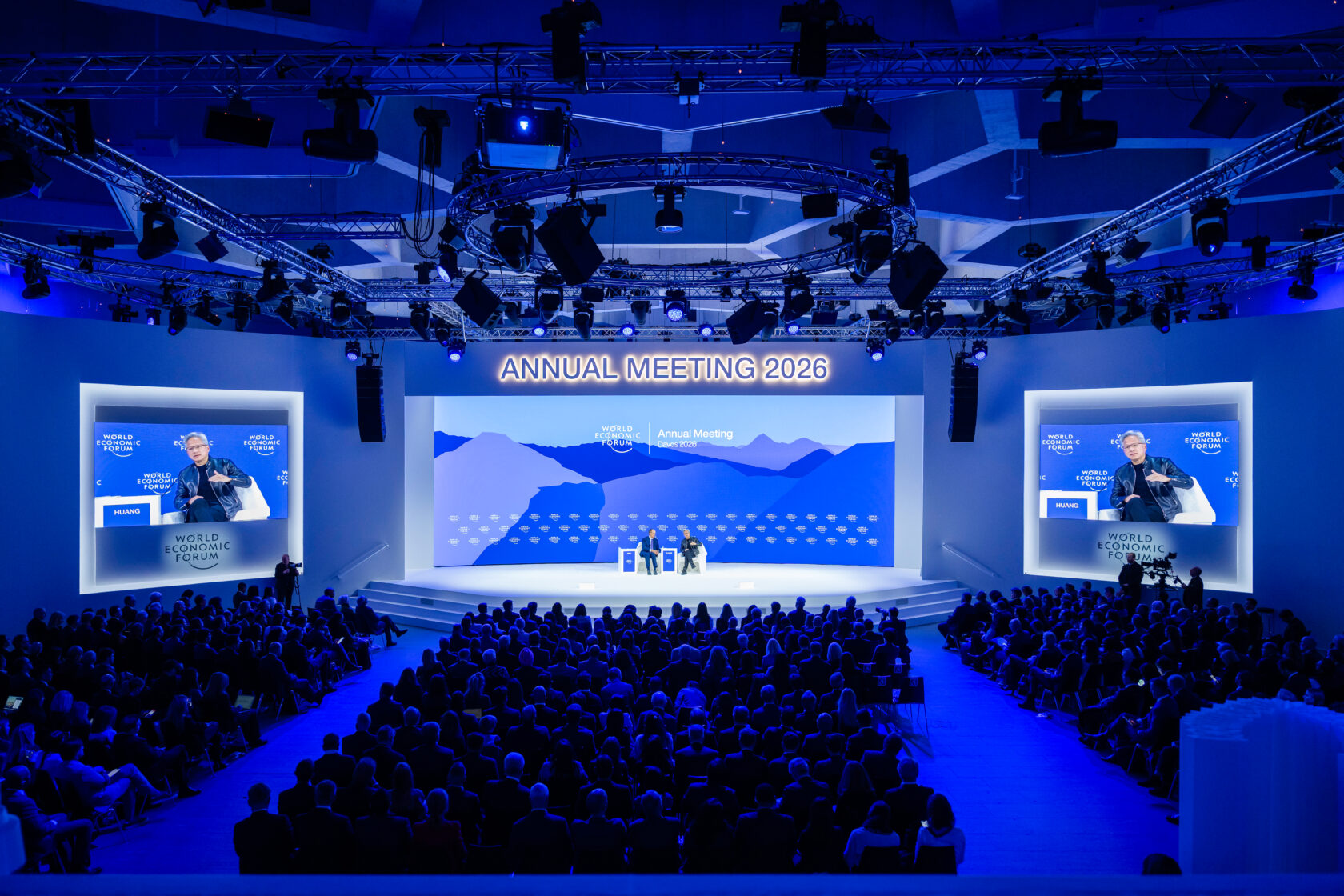
Artificial intelligence emerged as a rallying cry for job creation at the World Economic Forum in Davos, where business leaders played down fears of mass unemployment and stressed technology’s role in boosting productivity and demand for new skills. Executives argued that while some roles will disappear, AI-driven growth will create new opportunities across industries, from energy and infrastructure to skilled trades.
Jensen Huang, chief executive of Nvidia, said AI expansion would lift wages and employment for plumbers, electricians and steelworkers, repeating the mantra “jobs, jobs, jobs.” Other executives told Reuters that AI is often blamed for layoffs that companies were already planning due to bureaucracy or restructuring.
Scepticism nonetheless surfaced. Labour unions warned that AI is frequently sold as a productivity tool that means doing more with fewer workers, while delegates raised concerns about social and mental-health risks from widespread chatbot use. PwC noted that only a minority of CEOs currently see clear cost or revenue benefits from AI, highlighting uncertainty over returns.
Still, companies including IBM, Cisco and BlackRock said AI was already delivering efficiency gains without shrinking headcount. Microsoft co-founder Bill Gates urged governments and workers to prepare for both disruption and opportunity, arguing that higher productivity ultimately benefits economies. The Davos debate reflected a broader tension: optimism about AI’s promise tempered by unresolved questions over who gains, who loses, and how fast the transition unfolds.