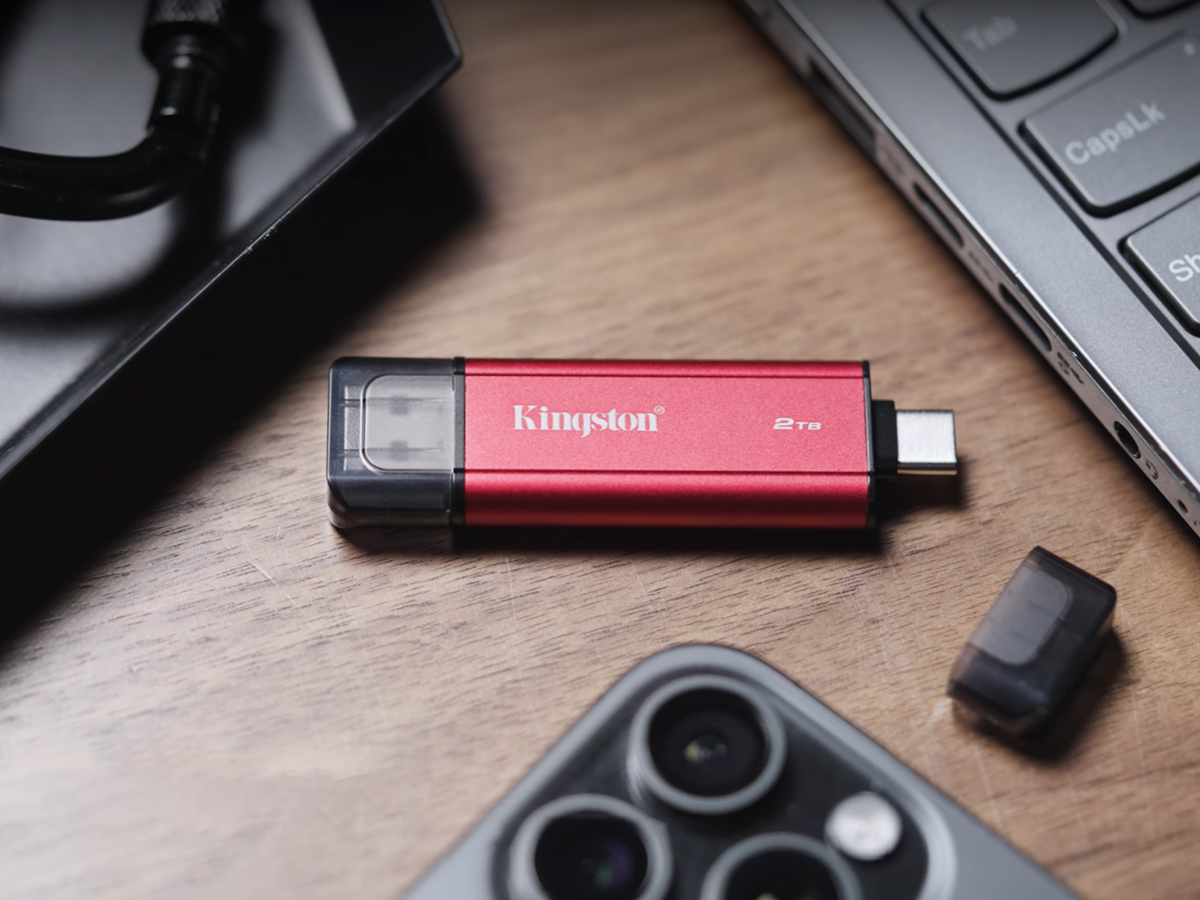
Having a portable flash drive that works seamlessly with both USB Type-A and Type-C ports without relying on adapters is undeniably convenient, and that’s exactly the niche Kingston’s Dual Portable aims to fill. The compact drive integrates both connectors into a tiny, pocket-friendly design and delivers solid everyday performance, even if it doesn’t top performance charts. Unfortunately, its biggest drawback isn’t speed or design, but a price tag that’s hard to justify against faster, cheaper rivals.
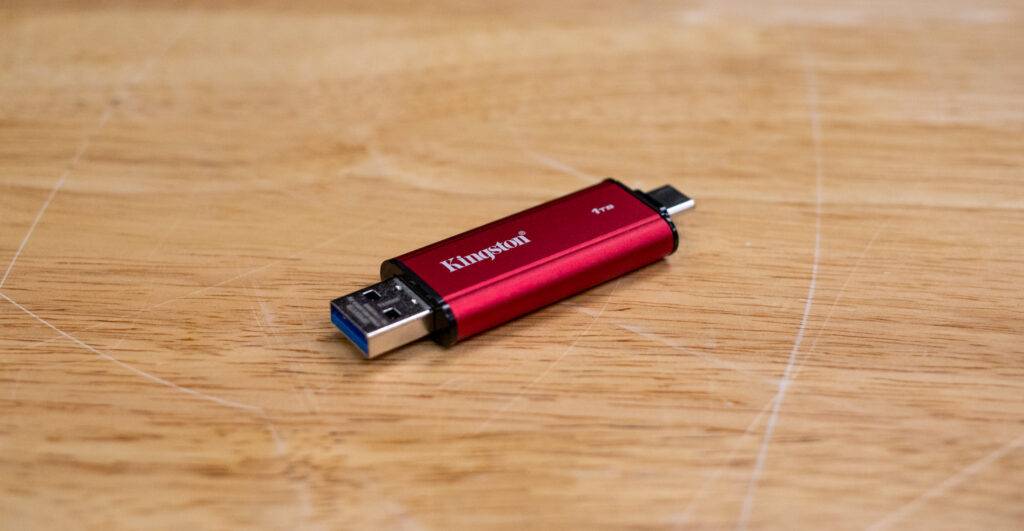
The Kingston Dual Portable is a 10Gbps USB 3.2 Gen 2 flash drive, similar in concept to competitors like the Teamgroup X2 Max. It features a Type-C connector on one end and a Type-A connector on the other, each protected by caps. Measuring roughly 2.75 inches long, 0.75 inches wide, and just 0.3 inches thick, and weighing only 0.4 ounces, it’s easy to forget it’s even in your pocket. Inside, Kingston uses a Silicon Motion SM2322 controller paired with 3D TLC NAND, likely from an older generation, which becomes evident during extended write workloads.
In performance testing, the Dual Portable proved more than adequate for average users, though it ranked 8th out of 10 flash drives tested overall. Synthetic benchmarks such as CrystalDiskMark showed results only slightly behind the rest of the pack, and it even outperformed the SanDisk Extreme Pro Dual. However, longer transfers revealed its limitations. During a 450GB write test, speeds dropped sharply once the secondary cache was exhausted, falling to around 120MBps after roughly 200GB of continuous writing.
Pricing is where the Dual Portable struggles most. Current listings put the 512GB model at $134, the 1TB version at $157, and the 2TB model at an eye-watering $330. That’s difficult to defend when competing drives like the Teamgroup X2 Max offer significantly better sustained performance at nearly half the price. If Kingston revisits its pricing strategy, the Dual Portable’s dual-connector convenience, ultra-compact design, and respectable short-burst performance could make it a compelling option. At current prices, however, it’s a tough recommendation.