
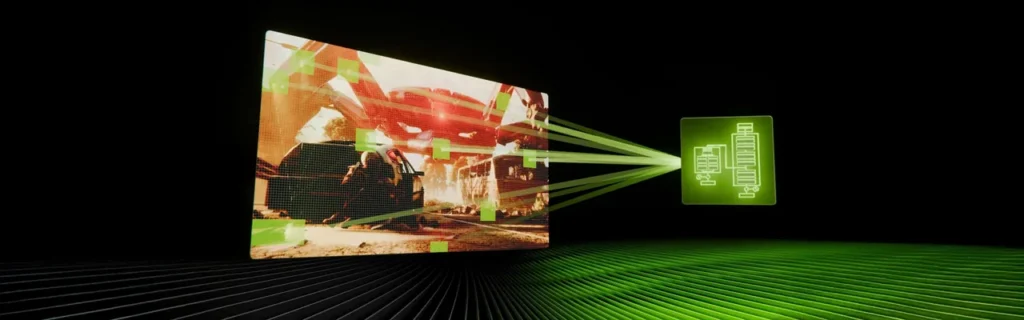
Even if Nvidia CEO Jensen Huang spent much of his CES keynote talking about topics well beyond consumer hardware, the company still had a notable gaming-related update to share: a new iteration of DLSS. Nvidia’s upscaling and frame-generation technology has now reached version 4.5, and parts of it are already available to test through the latest release of the Nvidia App for Windows.
That said, not every feature teased at CES is live yet. Some of the most attention-grabbing additions—such as 6× frame generation and dynamic frame generation, which intelligently applies the technology only as needed to meet performance targets—are currently missing. For now, the primary enhancement in DLSS 4.5 is an update to the Super Resolution models, the core upscaling component that has formed the backbone of DLSS for several generations.
Users who enable the DLSS Override feature in the Nvidia App can access several new model and preset options. These include Model M, which serves as the standard optimized DLSS model, Model L, which is specifically tuned for 4K resolutions, and Preset K, a new default preset that applies to remaining DLSS modes. Together, these changes are intended to improve image quality and performance consistency across different resolutions and workloads.
At the moment, DLSS overrides must be enabled on a per-game basis, making it best suited for users who already have performance targets in mind for specific titles. To support this, Nvidia has significantly expanded compatibility, adding DLSS override support for 77 additional games. High-profile examples include Arc Raiders, Call of Duty: Black Ops 7, Europa Universalis V, Final Fantasy VII Rebirth, Ninja Gaiden 4, and The Outer Worlds 2, giving players plenty of opportunities to test the updated models in real-world scenarios.