
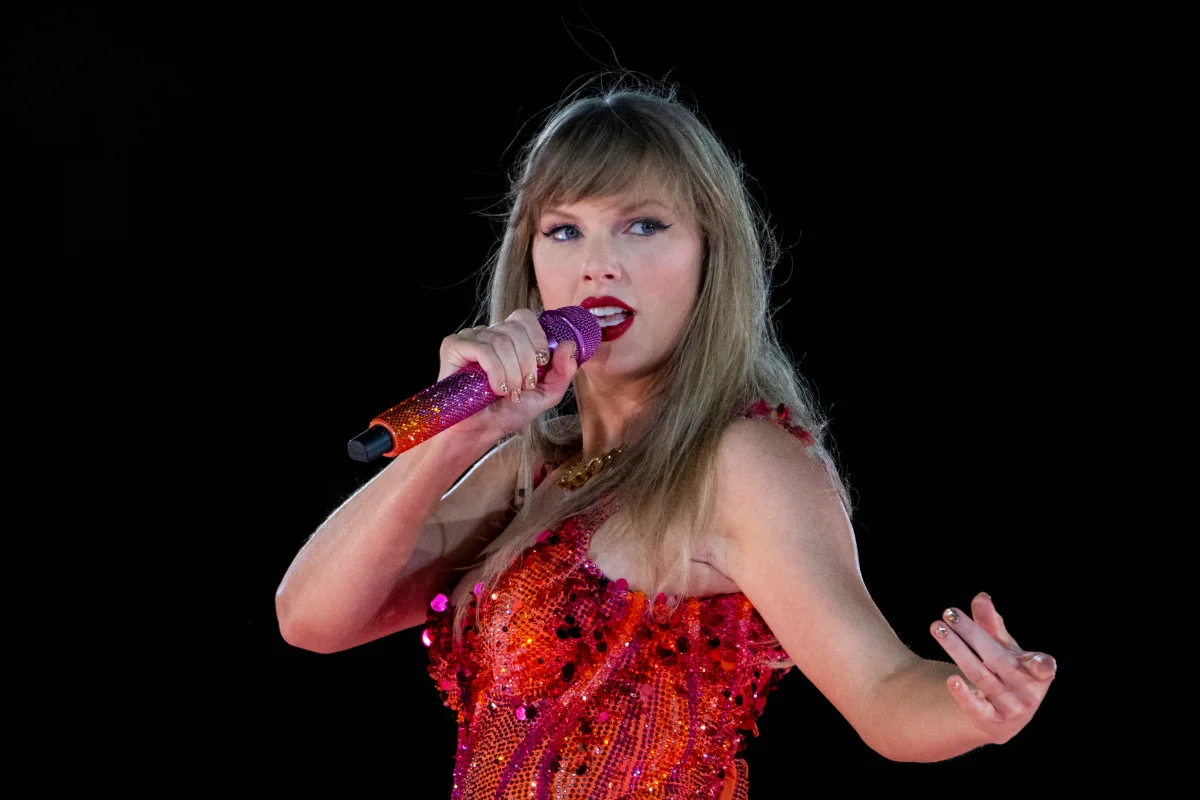
Taylor Swift has filed new U.S. trademark applications covering her voice and image in what appears to be a strategic legal move against the growing threat of AI-generated deepfakes.
The filings reportedly include:
- Two audio clips of Swift’s spoken voice
- One stage image of Swift performing with a guitar
Why This Matters
The move signals an emerging legal strategy for celebrities confronting generative AI systems that can replicate:
- Voices
- Faces
- Brand identity
- Commercial endorsements
Swift has frequently been targeted by unauthorized AI-generated content, including:
- Fake endorsements
- False advertising
- Political misinformation
- Explicit synthetic imagery
Legal Strategy: Trademark vs Traditional Protection
Historically, public figures have relied on:
- Copyright law
- Right of publicity laws
- Defamation protections
However, AI voice cloning introduces a new legal gap:
AI systems can imitate a person’s voice without directly copying existing copyrighted recordings.
Trademark protection could provide:
- Commercial identity enforcement
- Brand confusion claims
- Expanded takedown leverage
- Preventive legal perimeter around recognizable vocal signatures
Why the Audio Filings Are Significant
According to trademark experts, protecting spoken voice clips as trademarks may represent a relatively novel legal frontier.
This could potentially establish:
Voice as brand asset, not just copyrighted performance.
If upheld, such a framework may influence:
- Musicians
- Actors
- Influencers
- Political figures
Image Protection
Swift’s image filing—focused on a recognizable onstage visual—may also help combat:
- Synthetic image replication
- AI-generated impersonation
- Misleading promotional uses
Distinctive styling, pose, and presentation can strengthen claims when likeness is commercially exploited.
Broader Industry Context
This reflects a larger shift as creators seek stronger control over identity in the AI era.
Comparable concerns have affected:
- Matthew McConaughey
- Voice actors
- News broadcasters
- Public officials
Potential Industry Impact
If successful, Swift’s approach may accelerate:
- Celebrity trademark filings for voice identity
- New AI licensing frameworks
- Expanded digital identity law
- Court tests over synthetic impersonation
Strategic Implications
Swift’s move is especially notable because it is proactive—not reactive.
Rather than litigating after harm, this approach attempts to establish:
Consent + attribution + ownership before misuse occurs
Outlook
As AI-generated impersonation becomes cheaper and more realistic, legal frameworks are likely to evolve from protecting works alone toward protecting identity itself.
Swift’s filings may become an early benchmark in defining how intellectual property law adapts when:
A person’s voice and likeness become reproducible digital assets.