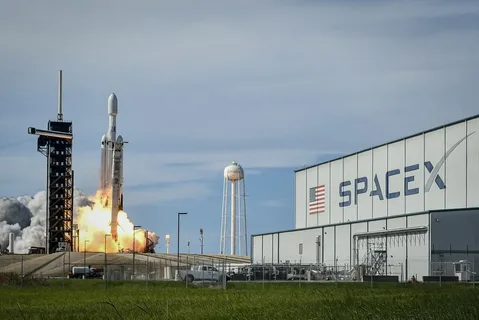
As SpaceX prepares to report its first quarterly results as a publicly traded company, investor interest extends far beyond revenue, profitability, and artificial intelligence. Ahead of Tuesday’s earnings call, retail shareholders have filled the company’s investor forum with an eclectic mix of questions ranging from lunar missions to whether Starship should be painted pink.
Following a model similar to Tesla’s shareholder engagement process, SpaceX launched an online platform where investors can submit and vote on questions they would like company executives—including CEO Elon Musk—to address during the earnings call.
While analysts are expected to focus on key financial topics such as Starlink’s revenue growth, AI-related investments, launch economics, and future profitability, many retail investors have prioritized questions about the company’s ambitious space exploration plans.
Among the most highly ranked submissions are requests for additional footage of the Starship Human Landing System (HLS), the spacecraft NASA plans to use for its upcoming Artemis lunar missions. Other investors asked when Starship will begin orbital refueling operations, achieve fully reusable launches by catching both the booster and upper stage, and expand its public educational outreach.
One popular discussion centered on “Asteroid,” SpaceX’s recently introduced Shiba Inu mascot, with shareholders suggesting the character could play a larger role in science education, children’s charities, and community engagement.
Some proposals were even more unconventional. Investors suggested painting Starship pink, while another recommended selling sponsorships for individual heat shield tiles so supporters could have their names flown into space.
The unusually broad range of questions reflects SpaceX’s shareholder base. Approximately 30% of the company’s initial public offering (IPO) was reportedly allocated to retail investors—one of the largest retail participation levels seen in a major U.S. public listing.
Despite enthusiasm surrounding the company, SpaceX’s share price has fallen by more than half from its post-IPO intraday peak, highlighting the volatility often associated with newly listed high-growth technology companies.
Interestingly, traditional financial topics received comparatively little attention on the investor forum. Questions regarding profitability, margins, and long-term cash flow ranked well below those related to future space missions and technological milestones. Even inquiries about the company’s AI strategy focused primarily on concepts such as orbital AI data centers rather than near-term financial performance.
Another notable observation was the limited interest in speculation surrounding a potential merger between Tesla and SpaceX. Although the topic generated significant attention during Tesla’s recent earnings call, it received almost no support among SpaceX shareholders despite recent media reports. Elon Musk has publicly denied those reports.
One investor raised a philosophical question inspired by Musk’s long-term vision of an AI-driven economy in which goods and services become so abundant that money may lose much of its traditional importance. The shareholder asked why people should continue investing if such a future materializes—a question that, notably, received no community support.
The discussion highlights how SpaceX occupies a unique position among publicly traded companies. While investors certainly care about earnings and execution, many are equally motivated by the company’s broader mission of advancing reusable rockets, satellite communications, lunar exploration, and eventually human settlement of Mars.
The company’s first earnings report is expected to provide important insight into the financial performance of Starlink, launch services, AI-related infrastructure initiatives, and the commercialization strategy supporting SpaceX’s long-term expansion.