
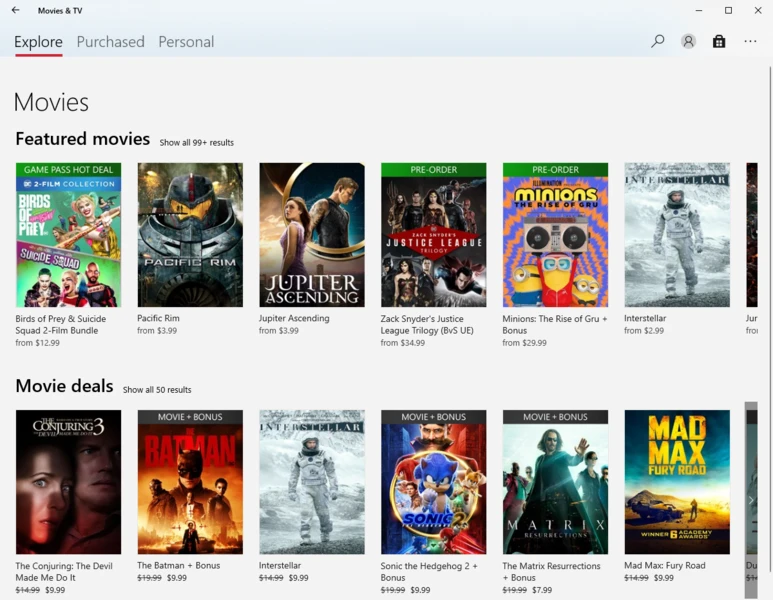
Microsoft has officially announced that it will shut down its Movies & TV store on both Windows and Xbox, marking the end of its digital video content sales. While users will still be able to access previously purchased movies and TV shows through the existing Movies & TV app, the storefront itself will no longer offer new content for sale or rental. This decision signals Microsoft’s continued retreat from the consumer media space, following the company’s earlier move to exit digital music sales with the closure of Groove Music back in 2017.
In practice, this move may not have a dramatic impact on most users. Microsoft’s Movies & TV platform never became a dominant player in the video-on-demand market, and its absence of a native streaming service left it increasingly out of sync with modern content consumption trends. Streaming platforms like Netflix, Disney+, and even Amazon Prime Video dominate user attention today, offering content either by subscription or via timed digital rentals. Many movies are available to stream only weeks after theatrical release — and with industry shifts like Warner Bros. reportedly bringing the latest Superman film to streaming just 45 days after its theatrical run, Microsoft’s model of à la carte digital sales feels antiquated by comparison.
Still, users who invested in Microsoft’s ecosystem may be understandably concerned. The company assures that existing purchases will remain available through the Movies & TV app on Windows PCs and Xbox consoles, with playback still supported in high resolution. However, Microsoft hasn’t clarified any long-term plans for the app itself or whether offline playback might be added — and unlike music purchases migrated to Spotify in the past, there is no download option for purchased video content here.
For those seeking a more flexible approach, third-party platforms like Movies Anywhere offer a practical solution. Much like how GOG Galaxy brings together scattered game libraries, Movies Anywhere can aggregate eligible film purchases across several platforms into a single interface. Unfortunately, not all movies qualify for this service, and Microsoft’s own store was never fully integrated into it.
In the end, Microsoft’s quiet retreat from digital video sales underscores a broader shift in how consumers access entertainment. Ownership-based digital media models are steadily giving way to subscription and cloud-based options — and Microsoft, recognizing this trend, is stepping aside. But for loyal users of the Movies & TV platform, the inability to download purchases remains a frustrating reminder of the risks of digital-only ownership.