
Virtual reality is emerging as an unexpected bridge between isolation and connection for older adults living in retirement communities, offering shared experiences that spark conversation, memory and social bonding.
At The Terraces, a retirement community in Los Gatos, California, residents in their 80s and 90s regularly put on VR headsets that transport them far beyond the quiet routines of daily life. In minutes, they can explore European cities, dive beneath the ocean’s surface or glide through the air on a virtual hang-gliding trip — all while seated side by side.
The experiences are powered by Rendever, which curates immersive group content specifically for senior living communities. The company says its platform is now used in around 800 facilities across the United States and Canada, turning what is often a solitary technology into a shared social activity.
During one session earlier this year, residents paddled their arms in unison as they “swam” with dolphins in a 3D underwater scene. “We got to go underwater and didn’t even have to hold our breath,” said 81-year-old Ginny Baird. Other sessions prompted gasps and nervous laughter, including a virtual hot-air balloon ride that felt almost too real for some viewers.
Beyond entertainment, the technology is also used to trigger memories. Rendever’s programming allows residents to revisit childhood neighbourhoods and familiar landmarks, sometimes for the first time in decades. For Sue Livingstone, 84, a virtual visit to her old neighbourhood in Queens, New York, revealed the deeper value of the experience. “It isn’t just about seeing it again,” she said. “It’s about all the memories it brings back.”
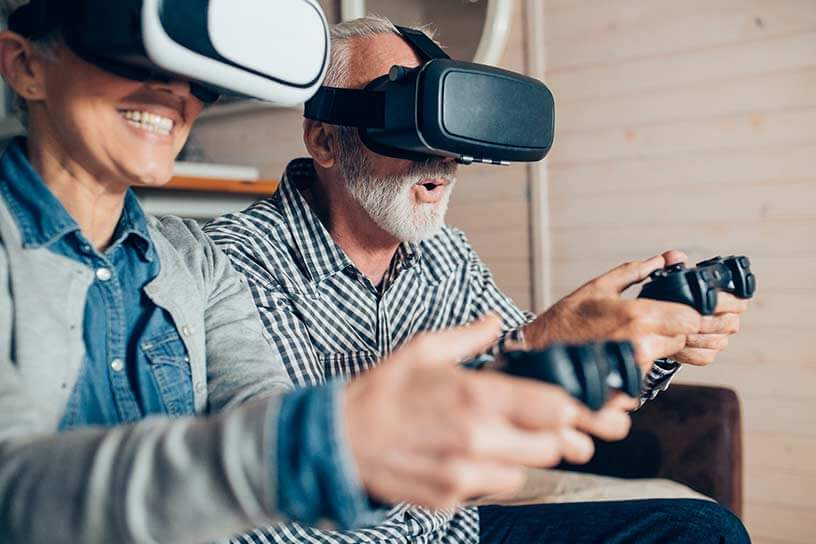
Staff at The Terraces say VR often becomes a social catalyst. Once residents talk about an experience, others grow curious and join future sessions, even skipping favourite games to try the headsets. Community life director Adrian Marshall said the shared moments help residents discover common interests and form new friendships. “It really does connect people,” he said. “It turns the artificial world into reality.”
Rendever is now expanding its ambitions. The company recently received nearly $4.5 million in funding from the National Institutes of Health to study how VR might reduce social isolation among seniors living at home and their caregivers.
Researchers say early studies suggest carefully designed VR experiences can help maintain cognitive function, strengthen memory and encourage social interaction. Katherine “Kate” Dupuis, a neuropsychologist at Sheridan College, cautioned that VR should complement, not replace, real-world activities. Used thoughtfully, she said, it can give older adults a shared sense of wonder.
Other experts note that VR headsets may be more intuitive than smartphones for some seniors, removing the need to navigate small buttons or complex menus. Pallabi Bhowmick, a researcher at the University of Illinois Urbana-Champaign, said the idea that older adults resist new technology is outdated. “They are willing to adapt when it’s meaningful,” she said, adding that VR can even strengthen intergenerational connections.
The growing interest has attracted competition. Dallas-based Mynd Immersive also offers VR services tailored to senior living communities. Both companies’ tools are sometimes used to help people with dementia reconnect emotionally, even if only briefly.
At another Silicon Valley retirement community, the Forum, VR sessions have helped residents relive treasured moments. Bob Rogallo, who has dementia and cannot speak, smiled and nodded as he took a virtual hike through Glacier National Park while celebrating his 83rd birthday. His wife, Sallie, said the experience echoed decades of travel memories. “This lets you get out of the same environment,” she said, “and either go somewhere new or return to a place you loved.”
For many residents, the headsets come off, but the conversations continue — at lunch, in hallways and during future sessions. In that way, virtual reality is quietly doing something very real: bringing people closer together.