
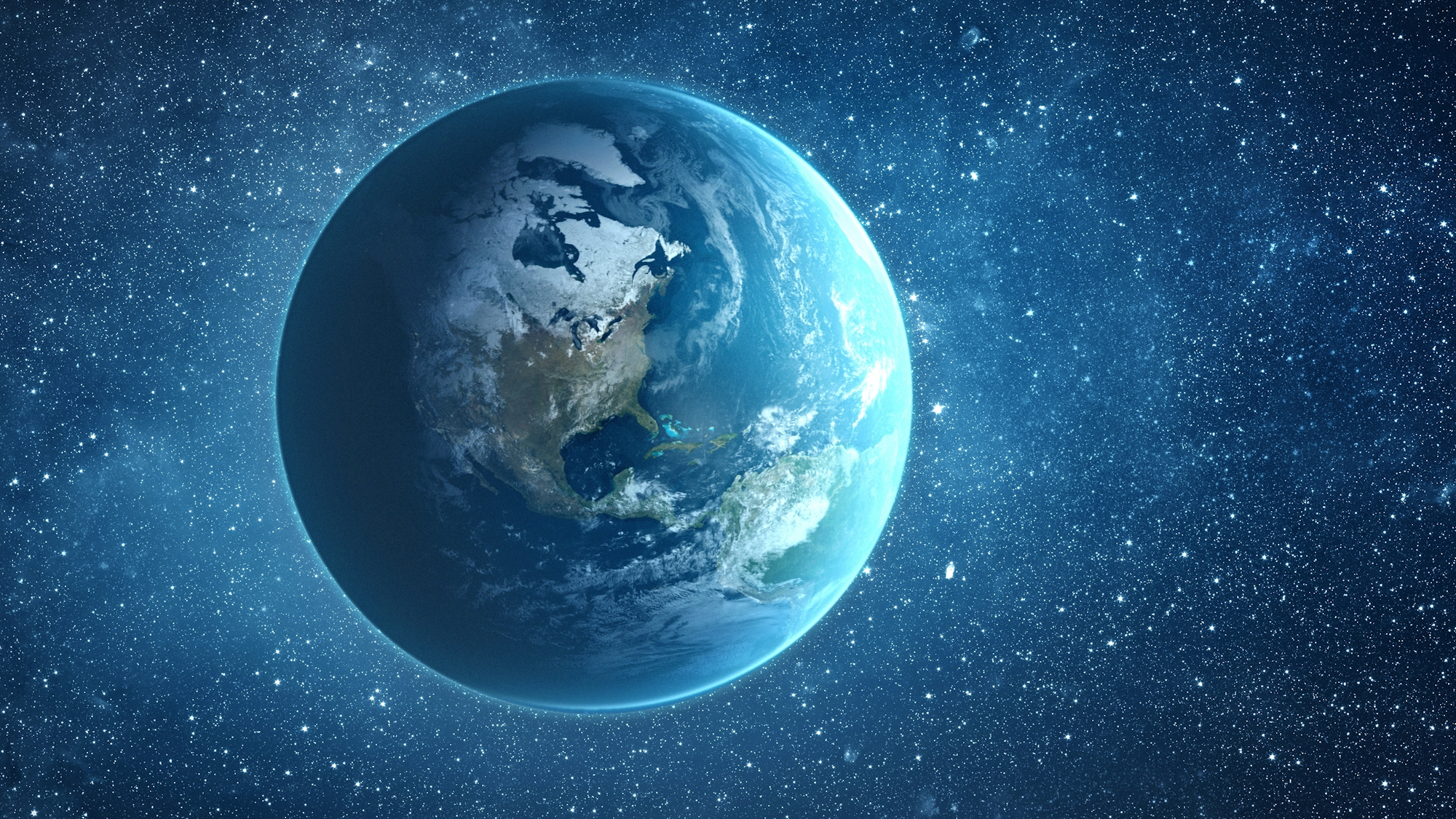
In collaboration with a Japanese university, NASA researchers used supercomputers to predict when life will no longer be possible on Earth.
In collaboration with researchers from Toho University in Japan, NASA researchers have used supercomputers to model and determine how long life will remain possible on Earth. The calculated end date for all life on Earth is still a long ways off, but the researchers warn that the potential end date for humans is sooner than we previously thought.
According to the study, the end of potential for all life on Earth hinges on the sun’s lifespan. In the coming billions of years, our sun will continue to grow and heat up Earth to such an extent that life will no longer be possible. Researchers estimate that this will happen in the year 1,000,002,021, when Earth’s surface conditions become so extreme that life becomes impossible for even the most resistant organisms.
What about for human life?
For us humans, things will become grave even earlier. As the sun gets hotter and hotter, the Earth’s atmosphere will change considerably. This will lead to falling oxygen content, poor air quality, and a sharp rise in temperatures. These changes were predicted using a detailed model for climate change and solar radiation.
Signs of these changes can already be felt, too. Coronal mass ejections and solar storms have increased in intensity and are affecting the Earth’s magnetic field, and that’s already reducing the oxygen content of the atmosphere, giving researchers insight into the longer-term effects. Human-induced climate change is also accelerating us towards the end, with the world already seeing rises in global temperatures and the melting of polar ice.
No specific end date was given for human life. However, according to the researchers, it’s quite possible that environmental conditions will become too difficult for humans much earlier than the billion-year timeframe.
Potential solutions for the far future
Life on Earth won’t suddenly end—it will fizzle out with a slow, irreversible decline. But despite the long time span, researchers are urging the importance of preparation and adaptation for humanity’s future now.
Some scientists are proposing technological interventions, including closed life support systems and artificial habitats to preserve habitable environments for as long as possible.
Others, meanwhile, are even looking to other planets in our solar system. Plans for long-term space colonization, including the Mars missions led by NASA and SpaceX, are being explored as potential strategies for sustaining human life once Earth itself becomes uninhabitable.