
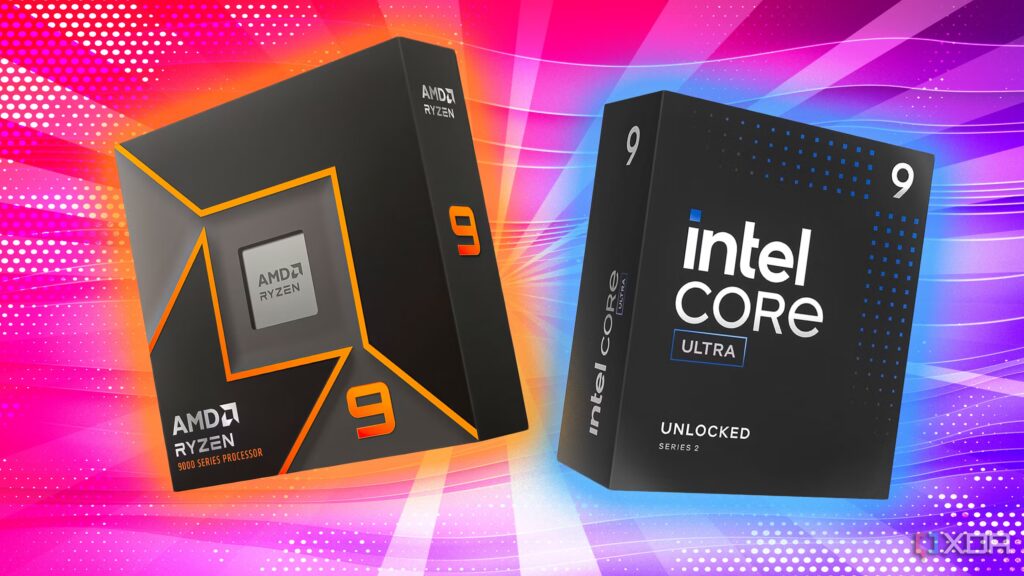
Intel is making bold moves to reassert its presence in the semiconductor industry, with recent headlines highlighting its partnership with Nvidia. But reports suggest the company’s ambitions extend further, as negotiations are underway with long-time rival AMD. According to Semafor, the two firms are exploring an agreement that would see Intel manufacture AMD chips in its foundries—an arrangement that could alter the competitive landscape of the chip market.
The deal, still in early stages and facing potential regulatory scrutiny, would allow Intel to fabricate AMD’s processor designs, even as the two companies continue to compete fiercely in the CPU market. Intel, which has struggled to keep pace with Taiwan Semiconductor Manufacturing Company (TSMC), sees this as an opportunity to position its foundry business as a serious alternative. TSMC remains the primary manufacturer of AMD’s high-end chips, leveraging its advanced 5nm and 3nm processes. Intel’s 18A technology—comparable to 2nm—is not expected to be fully production-ready until 2025, meaning Intel may initially take on less complex AMD products.
Bringing AMD on board would nonetheless be a symbolic win for Intel’s foundry division, which has struggled to attract large customers. Nvidia recently invested $5 billion in Intel’s foundry ambitions, and Apple has also been approached, underscoring the importance of building a strong client base. Geopolitical risks, particularly around Taiwan where TSMC is based, as well as U.S. government incentives through the CHIPS Act, further bolster the appeal of shifting more semiconductor production stateside.
Intel’s recently appointed CEO, Lip-Bu Tan, has prioritized restructuring and aggressive cost-cutting to reverse the company’s decline in global chip rankings, particularly in the lucrative AI hardware sector. News of the AMD talks pushed Intel’s stock up 3.5 percent, signaling investor confidence in the potential deal. For AMD, diversifying its manufacturing base could help reduce reliance on TSMC while strengthening its U.S. ties. If finalized, this unprecedented collaboration would mark a turning point for the American semiconductor industry, blending competition with cooperation in the race for global dominance.