
Motherboard sizes have been fairly standardized for years, with most consumers choosing between ATX, micro-ATX, and mini-ITX depending on their needs. Now, a new challenger has entered the scene: YTX, a form factor introduced by Chinese manufacturer Maxsun. Unlike traditional formats that emphasize PCIe card expandability, YTX shifts priorities by cutting down on DIMM slots and PCIe options in exchange for expanded M.2 SSD support.
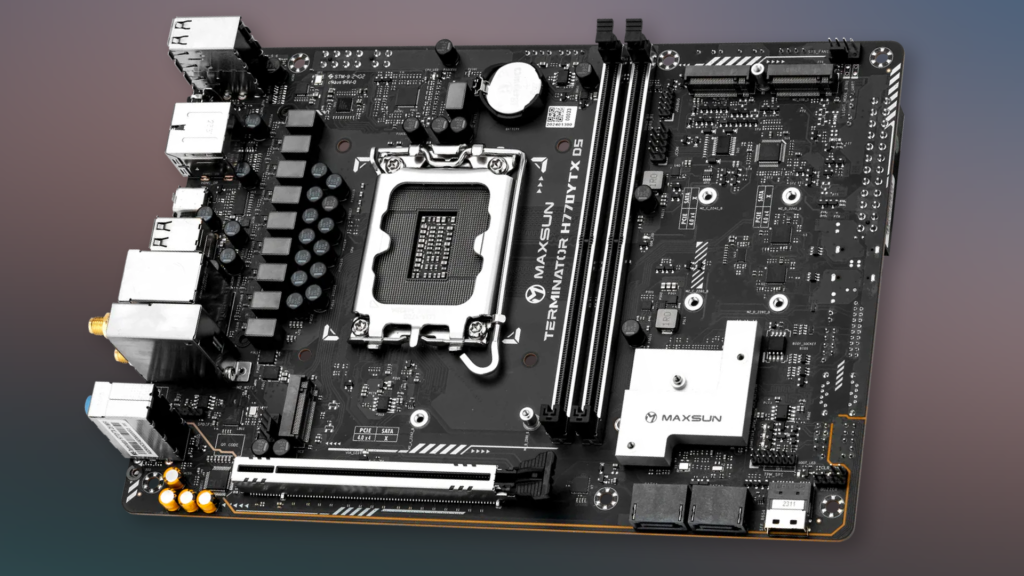
The debut YTX board is the MS-Terminator H770, designed for Intel’s LGA 1700 socket and H770 chipset. Measuring 245mm x 175mm, it matches the length of a mini-ITX board (170mm) but extends an additional 75mm in width. This extra space accommodates three full-length M.2 2280 slots mounted in plain view, plus a fourth stacked slot, all running at PCIe 4.0 speeds. In addition, the board includes a PCIe 5.0 slot for graphics, along with built-in Wi-Fi 6, Bluetooth 5.2, and modern connectivity features.
The MS-Terminator H770 also follows the growing trend of placing SATA, power, and other key connections on the back of the PCB. This approach makes cable routing much easier, allowing for much cleaner small-form-factor (SFF) builds. The design reflects a deliberate focus on compact but powerful rigs, where storage often becomes a bigger limitation than RAM capacity or add-in card slots.
The real question is whether case makers will support the new YTX format. While the board won’t fit in a standard mini-ITX tray, it should slot into a micro-ATX case without modification, at least until custom YTX cases are developed. Pricing and availability remain unclear, but it’s a bold experiment in a market where motherboard standards rarely change.