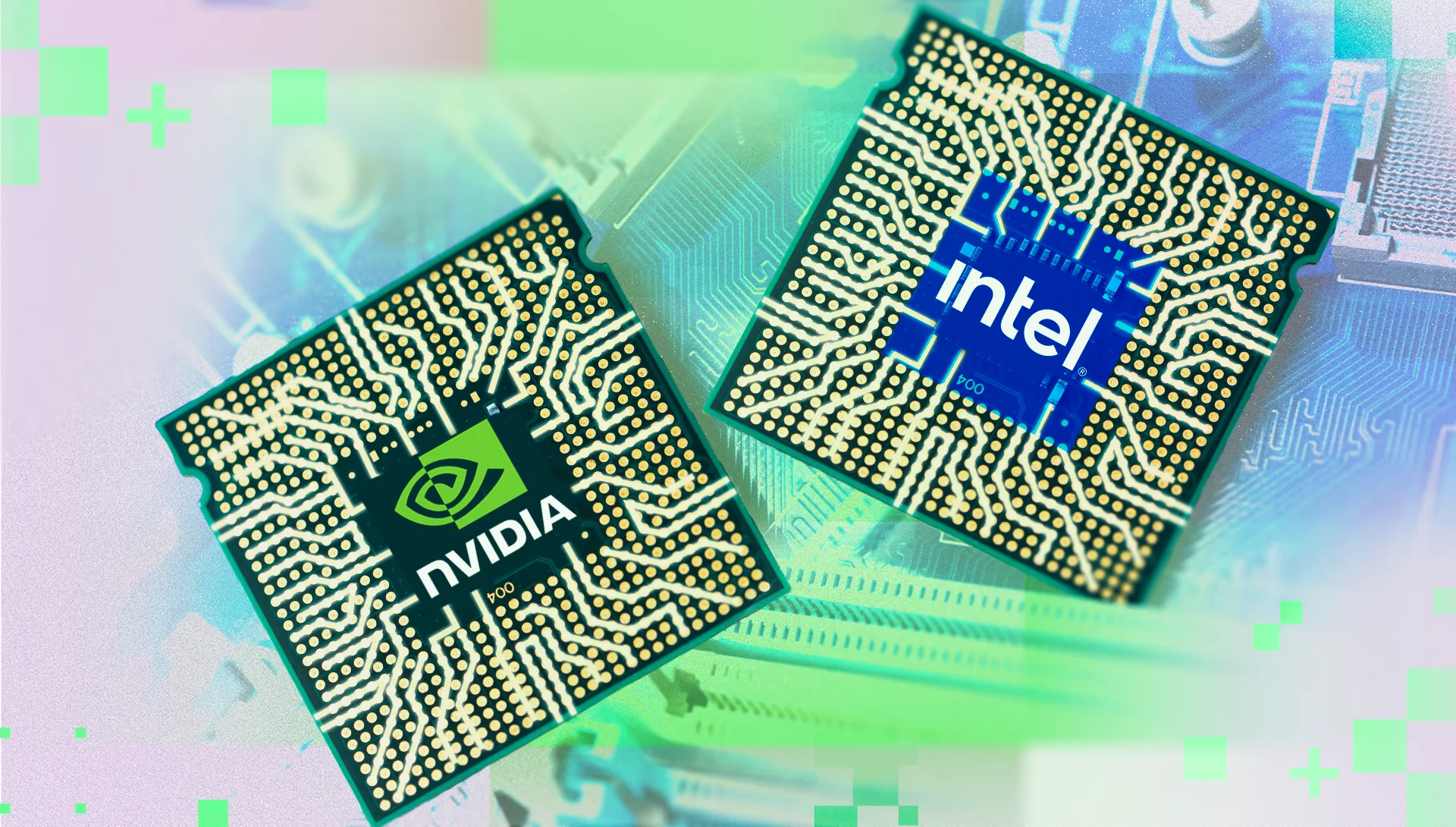
Intel and Nvidia have yet to disclose exactly when their co-designed integrated CPUs will hit the market, and analysts suspect it could be several years before the first products appear. Last week, Nvidia announced a $5 billion investment into Intel, part of a collaboration in which Intel will supply CPU cores to Nvidia for potential data center applications. For PCs, the partnership will focus on mobile processors, with Nvidia providing RTX GPU chiplets that Intel could integrate into its CPUs—an arrangement that could reshape the future of laptop graphics.
Nvidia CEO Jensen Huang emphasized that the partnership has been in development for roughly a year. He described the collaboration as an effort to create a system-on-chip (SoC) that fuses Intel CPUs with Nvidia RTX GPUs through NVLink, effectively creating a “virtual giant SoC” capable of delivering a level of integrated graphics performance the laptop market has never seen. Intel, for its part, stated that the partnership will not disrupt its existing roadmap but will offer premium options across multiple product categories.
Despite the hype, industry observers are skeptical. Sources at competing firms believe the first consumer-ready products are likely more than two years away and doubt that Intel can successfully integrate NVLink into a CPU-GPU SoC. Previous Intel missteps—including Arrow Lake’s desktop performance issues and recent processor bugs—have fueled these concerns. Questions also remain about Nvidia’s motivation, given that its discrete GPUs already provide high performance and are widely adopted.
The partnership echoes Intel’s past collaborations, such as the “Kaby Lake G” chips co-developed with AMD and shipped in 2018, which fused Intel CPUs with Radeon Vega graphics. While innovative at the time, the chips saw limited adoption and never evolved into a broader line of products. Competitors worry that history could repeat itself.
Meanwhile, other rivals are also positioning for growth in laptops. Qualcomm is expected to release new Snapdragon mobile processors this week, though ARM-based Copilot+ PCs still account for a tiny fraction of Windows PC sales—just 2.3 percent in the first quarter of 2025. Mercury Research noted that growth in ARM laptop adoption appears to have plateaued, leaving Intel’s dominance largely unchallenged for the time being.