
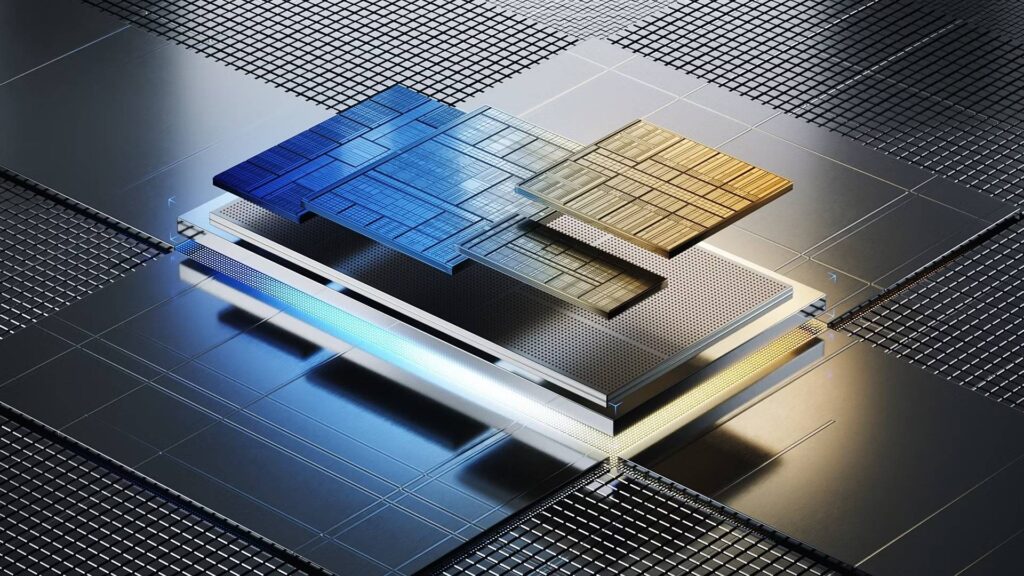
After reviewing a steady stream of Intel-powered laptops over the past year, frustrations were hard to avoid. Intel’s Core Ultra Series 2 branding quickly became confusing, blending Lunar Lake, Arrow Lake, and Meteor Lake under a single label that often obscured what buyers were actually getting. At CES 2026, however, Intel finally appears to have turned a corner. The newly announced Core Ultra Series 3, codenamed Panther Lake, looks like a unified, well-defined platform—one that finally positions Intel to compete more convincingly with both AMD and Qualcomm.
Intel’s renewed confidence was on full display. After relying on TSMC to manufacture Lunar Lake, Intel has returned to producing its own CPUs. That shift coincides with a major partnership involving Nvidia and a substantial investment from the U.S. government, which has now become a shareholder in Intel’s operations. Despite recent missteps, Intel’s leadership made it clear that the company is far from finished.
Battery life and performance finally converge
Lunar Lake was an unusual experiment. Built by TSMC, it emphasized power efficiency, featured non-upgradable onboard memory, and included a capable NPU for Copilot+ PC features alongside surprisingly strong integrated graphics. Battery life was excellent—but multithreaded CPU performance lagged far behind Arrow Lake and Meteor Lake in real-world benchmarks such as Cinebench and HandBrake.
As a result, many laptops ultimately favored Arrow Lake or Meteor Lake, trading efficiency for stronger performance while running hotter and draining batteries faster. Panther Lake aims to eliminate that compromise. Intel claims over 50% better multithreaded performance compared to Lunar Lake and Meteor Lake, while using 10% less power than Lunar Lake. Performance is said to be on par with Arrow Lake, suggesting Intel may finally deliver strong CPU performance without sacrificing efficiency.
Integrated graphics take a major leap
Intel’s progress on integrated graphics is becoming increasingly difficult to ignore. The new Arc B390 iGPU is being positioned as competitive with Nvidia’s RTX 4000-series discrete GPUs—and early benchmarking at CES 2026 suggests that claim isn’t far-fetched.
Lunar Lake delivered impressive graphics but paired them with a CPU that struggled under heavier workloads. Meteor Lake and Arrow Lake improved CPU performance but regressed on graphics. Panther Lake combines Intel’s fastest integrated GPU yet with a significantly stronger CPU, opening the door to laptops that can deliver credible gaming performance without a discrete GPU. Several manufacturers, including HP, showcased gaming demos running entirely on Intel’s new iGPU at CES.
Challenging AMD in gaming handhelds
Intel is also setting its sights on the handheld gaming PC market, an area currently dominated by AMD-based designs. Panther Lake is expected to scale into custom configurations tailored specifically for handhelds, and Intel executives were openly confident—one even dismissing AMD’s current handheld silicon as outdated.
AMD pushed back, arguing that Panther Lake would bring unnecessary overhead and prove unsuitable for handheld devices. Whether Intel’s claims hold up will depend on real-world products, but increased competition in this space can only benefit consumers.
NPUs finally meet Microsoft’s requirements
Intel’s NPU story has been a weak point for years. While Microsoft set a 40 TOPS minimum for Copilot+ PCs back in 2024, Intel continued shipping NPUs delivering roughly 13 TOPS, leaving most Intel-powered laptops short of the requirement. Only Lunar Lake—and now Panther Lake—meet Microsoft’s threshold.
Meanwhile, Qualcomm’s Snapdragon X and AMD’s Ryzen AI chips consistently met or exceeded Microsoft’s specs. While Microsoft appears to be deemphasizing Copilot+ features, Panther Lake at least puts Intel back on equal footing.
A renewed commitment to manufacturing
Intel’s return to in-house manufacturing is just as significant as the silicon itself. After publicly considering abandoning its 14A process in mid-2025, Intel reversed course following U.S. government investment. At CES 2026, Intel leadership expressed strong confidence in its future manufacturing roadmap.
Panther Lake is the first product built on Intel’s 18A process, and Intel has moved away from some of Lunar Lake’s more controversial design choices, such as on-package memory. The return to upgradeable RAM alone could help keep system costs under control.
The branding question remains
Despite the improvements, skepticism remains around Intel’s naming strategy. “Core Ultra Series 3” currently means Panther Lake—but history suggests Intel may later apply the same branding to older architectures, once again muddying the waters.
Even so, Panther Lake represents a meaningful reset. Intel is aligning performance, efficiency, graphics, and manufacturing under a single platform. If real-world laptops deliver on these promises, Panther Lake could mark Intel’s strongest mobile comeback in years.