
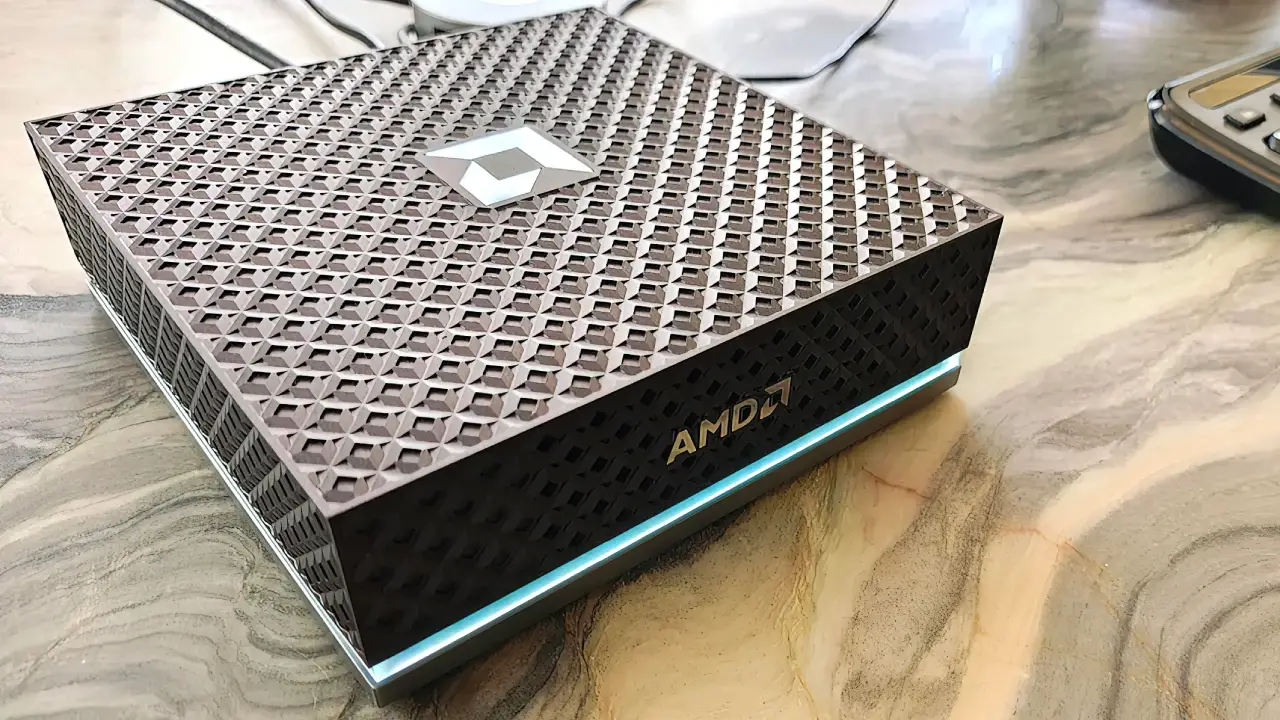
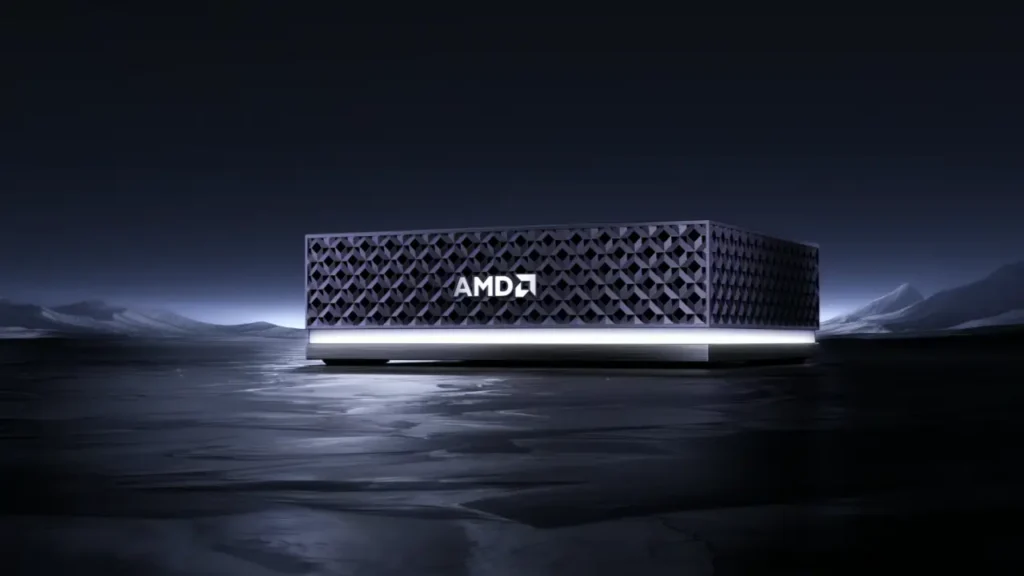
AMD Launches $4,000 Ryzen AI Halo Mini PC for Local AI Development
AMD has officially launched its flagship Ryzen AI Halo mini PC, a compact workstation designed specifically for running large AI models locally. While the hardware packs impressive specifications—including a 16-core Ryzen AI processor and 128GB of unified memory—its $4,000 price tag makes it a niche product aimed at AI developers rather than mainstream PC users.
The system serves as AMD’s direct competitor to Nvidia’s AI-focused DGX Spark platform.
Built for Local AI, Not Gaming
Unlike traditional high-performance desktops, the Ryzen AI Halo is optimized for local large language model (LLM) inference.
Its primary purpose is to allow developers and businesses to run sophisticated AI models on their own hardware instead of relying on cloud-based AI services, potentially reducing long-term subscription fees and API costs.
Although the machine can handle gaming, AMD positions it as an AI workstation first and foremost.
High-End Hardware Specifications
The flagship configuration includes:
- AMD Ryzen AI Max+ 395 processor
- 16 Zen 5 CPU cores
- 128GB unified LPDDR5X memory
- 2TB SSD storage
The large unified memory pool is particularly important for AI workloads, allowing bigger language models to run locally without being constrained by the limited VRAM found on most discrete graphics cards.
AMD’s Alternative to Nvidia DGX Spark
The Ryzen AI Halo is AMD’s answer to Nvidia’s DGX Spark mini workstation.
Unlike Nvidia’s Arm-based platform, AMD’s solution uses a conventional x86-64 architecture, making it compatible with existing Windows and Linux software while requiring fewer changes to existing development workflows.
AMD also claims the system delivers stronger performance than competing platforms in certain AI benchmarks measured by tokens generated per second, although these comparisons are limited to specific workloads.
Capable Gaming Performance—But Poor Value for Gamers
The integrated Radeon graphics are powerful enough to run modern PC games, but gaming is far from the machine’s intended purpose.
At roughly $4,000, buyers could instead build or purchase:
- A significantly faster gaming desktop
- A premium gaming laptop
- A workstation with a dedicated high-end graphics card
For gaming alone, the Ryzen AI Halo’s expensive unified memory configuration offers little practical benefit compared to conventional hardware.
Availability Still Limited
Although AMD has announced the system as available, retail availability appears to remain limited.
At the time of writing, configurations running either Windows 11 or Linux are not yet listed for purchase through Micro Center.
Competition Already Exists
AMD’s own hardware isn’t the only option using this platform.
Several manufacturers have already announced mini PCs based on the same Ryzen AI Halo processor, including the Framework Desktop, which offers similarly equipped configurations at comparable prices.
As local AI continues gaining momentum, systems like Ryzen AI Halo are expected to compete directly with Nvidia-powered AI workstations, offering developers another option for running increasingly large AI models entirely on local hardware.