

Researchers Develop Smart Ring That Analyzes Sweat Instead of Just Tracking Vital Signs
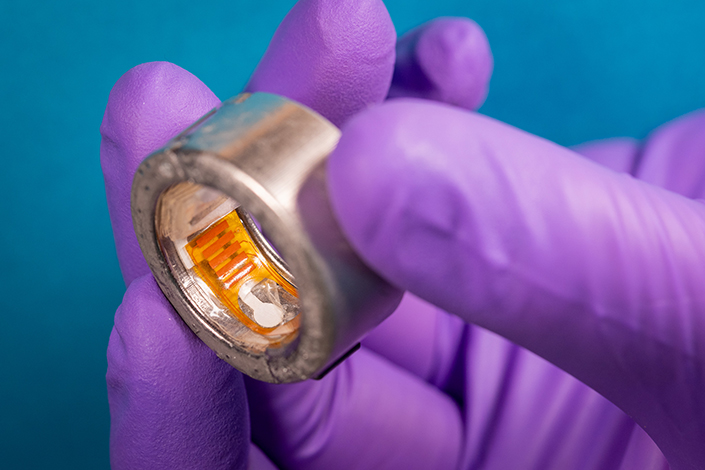
Engineers at the University of California, San Diego (UC San Diego) have developed a prototype smart ring capable of analyzing chemical biomarkers in finger sweat, potentially opening a new chapter in wearable health technology. Unlike today’s commercial smart rings, which primarily monitor physical metrics such as heart rate and blood oxygen levels, the new device measures the body’s chemistry in real time.
The research, published in Nature Communications on July 23, demonstrates how future wearables could provide continuous molecular health monitoring without invasive procedures.
Monitors Multiple Biomarkers Through Sweat
The prototype smart ring uses electrochemical sensors to analyze sweat collected from the wearer’s finger.
Depending on the configuration, it can continuously monitor up to four of the following biomarkers:
- Glucose
- Ketones
- Vitamin C
- Uric acid
- Lactate
- Alcohol
These measurements could provide valuable insight into metabolism, nutrition, exercise recovery, and overall health.
Works Without Exercise
One of the ring’s most innovative features is that users do not need to exercise or sweat heavily for it to function.
Researchers developed a special osmotic hydrogel that gently draws sweat from the skin using a pressure gradient. The process is painless and provides a continuous sample for the ring’s electrochemical sensors to analyze.
The collected data is then transmitted wirelessly to a smartphone application for real-time monitoring.
Prototype Design
The device features a compact 3D-printed polymer housing containing:
- A miniature electronic circuit board
- Electrochemical sensing system
- Rechargeable zinc-silver oxide battery
The custom battery currently provides up to 12 hours of operation on a single charge.
While suitable for research, battery life remains well below commercial smart rings, many of which can operate for more than a week between charges.
Potential Benefits for Diabetes Management
Researchers believe the technology could be particularly valuable for people managing chronic health conditions.
According to the UC San Diego engineering team, simultaneously monitoring glucose and ketone levels could help improve insulin dosing and diabetes management.
During testing involving both healthy participants and individuals with Type 1 diabetes, the ring’s glucose readings closely matched those produced by commercial continuous glucose monitors. Ketone measurements also showed strong agreement with existing blood-testing devices.
Expanding the Future of Wearable Health Technology
Most current smart rings rely on optical sensors to measure physiological signals such as:
- Heart rate
- Blood oxygen saturation
- Body temperature
- Sleep patterns
The UC San Diego prototype instead focuses on the body’s underlying chemistry, potentially allowing future wearable devices to detect nutritional status, metabolic changes, hydration, and other health indicators continuously.
Although still an early-stage research project, the technology highlights how smart rings could evolve beyond tracking vital signs to provide a far more detailed picture of a user’s health at the molecular level.