Lenovo has long used major trade shows as a stage to share experimental ideas, and this year’s IFA 2025 in Berlin is no exception. Alongside laptops and workstations, the company unveiled a series of intriguing prototypes that reimagine how people interact with their devices. Among the highlights is the Smart Motion Concept, a multidirectional laptop stand that uses sensors and AI to track a user’s face and automatically adjust the laptop’s position. The goal is straightforward: reduce eye and neck strain while simultaneously optimizing the angle for video calls.
The Smart Motion Concept builds on technology Lenovo previewed earlier in 2025 with its AI Display, which incorporated a built-in NPU to both modernize older PCs with AI features and physically reposition the screen for ergonomic benefits. That earlier idea was pitched for communal workspaces where different people might cycle through the same desk setup. The Smart Motion Concept adapts that principle to laptops, making the stand an intelligent companion that follows the user’s movements much like an advanced gimbal-equipped webcam. Demonstrations even showed how the stand could smoothly pivot as an analyst walked around, keeping the laptop perfectly aligned.
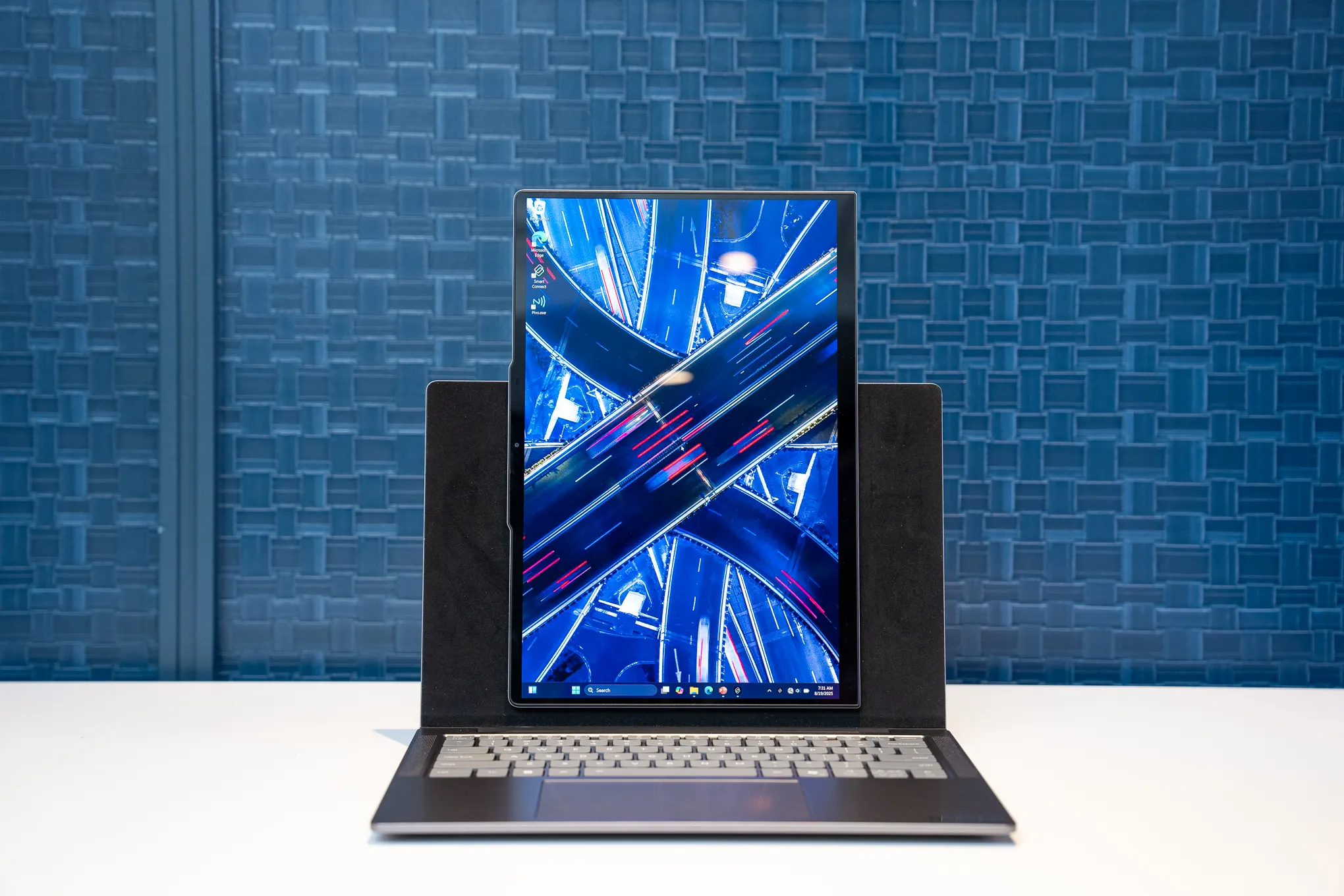
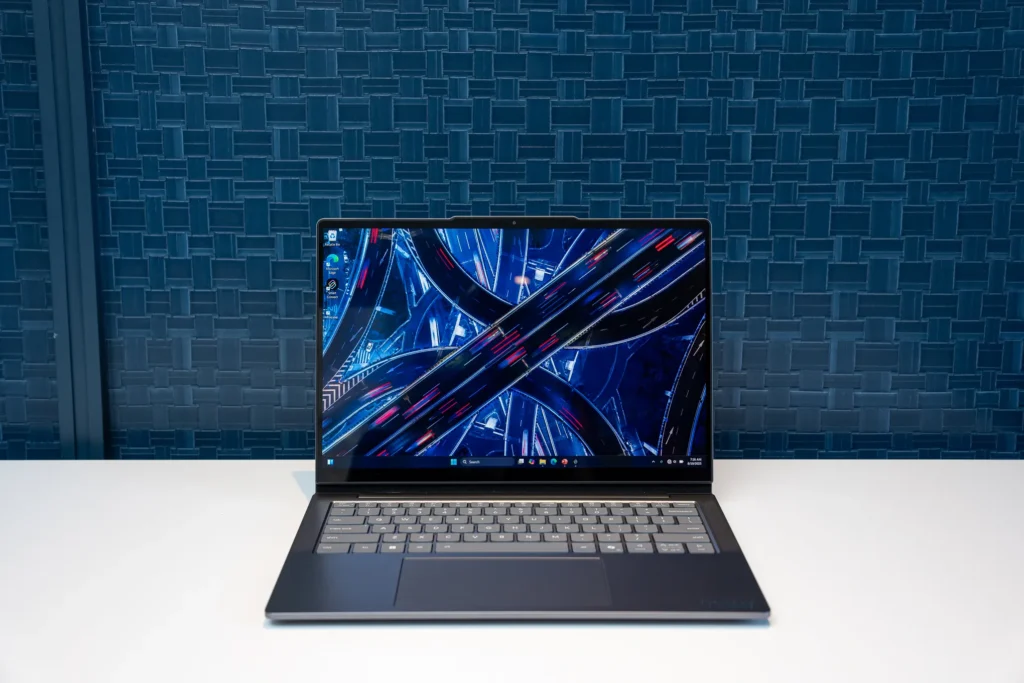
But Lenovo didn’t stop there. The company also showed off its ThinkBook VertiFlex Concept, which takes a traditional 14-inch clamshell laptop and gives it the ability to rotate its display into portrait orientation. This mode is particularly well suited for reviewing lengthy documents, coding, or scrolling through vertical feeds. At just over three pounds, the prototype suggests a practical design, and Lenovo hinted at additional integrations such as docking a smartphone against the display’s rear side—though whether this will serve for charging or simply convenience remains unclear.
To round out the showcase, Lenovo introduced Magic Bay Tiko, a smart screen accessory, and demonstrated the use of an AI-powered gesture control ring that can manipulate these devices without physical contact. Taken together, these experiments reflect Lenovo’s willingness to explore unconventional ideas, much as IBM once did in its research labs. Whether these concepts ever reach mainstream products remains to be seen, but they highlight Lenovo’s continued drive to shape the future of how we interact with PCs.