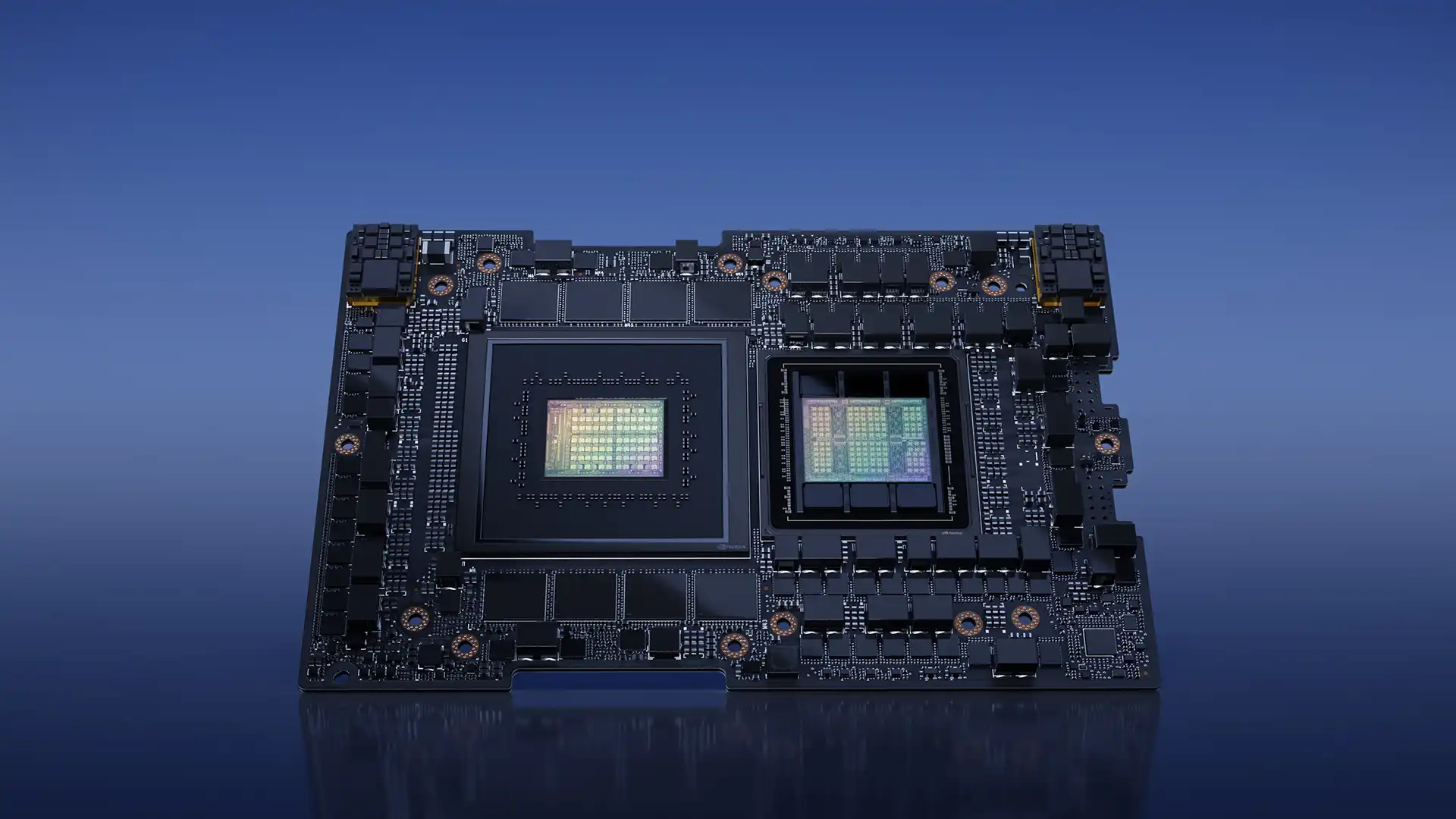

South Korea’s Samsung Electronics is expected to report a sharp surge in fourth-quarter operating profit, fueled by soaring memory chip prices amid booming demand linked to artificial intelligence.
The world’s largest memory chipmaker is likely to post an operating profit of 16.9 trillion won ($11.7 billion) for the October–December period, according to LSEG SmartEstimate based on forecasts from 31 analysts. That would represent a 160% increase from 6.49 trillion won a year earlier and mark Samsung’s strongest quarterly profit since the third quarter of 2018, when it reached a record 17.6 trillion won.
Semiconductor prices have climbed rapidly in recent months as manufacturers shifted production toward AI-related chips, constraining supply of traditional memory. At the same time, demand has surged for both conventional and advanced chips used to train and run AI models. Some analysts have recently lifted their profit forecasts for Samsung to above 20 trillion won, citing stronger-than-expected pricing for traditional memory chips.
Market researcher TrendForce said prices for DDR5 DRAM chips jumped 314% in the fourth quarter from a year earlier and expects conventional DRAM contract prices to rise a further 55% to 60% in the current quarter. TrendForce analyst Avril Wu noted that Samsung, whose production capacity is heavily concentrated in conventional DRAM, stands to benefit more than peers from the current price upcycle.
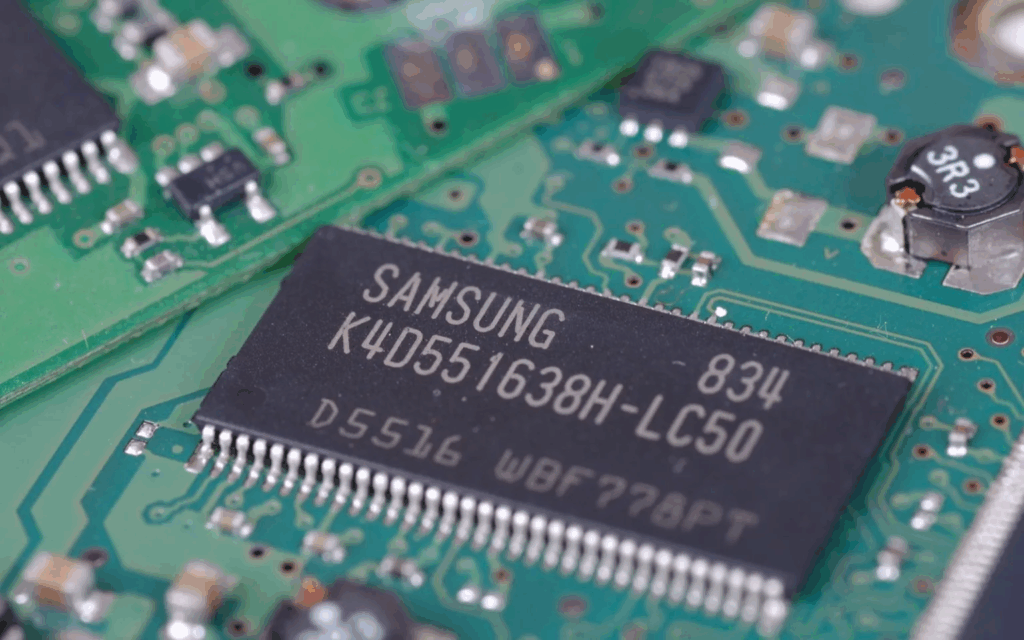
Samsung’s rebound comes after a difficult period in which it lagged rivals such as SK Hynix in supplying high-end chips to Nvidia, the dominant AI processor maker. Samsung shares surged 125% last year, their biggest annual gain in 26 years, though they dipped slightly on Tuesday as the broader market paused.
On Friday, Samsung CEO Jun Young-hyun said customers had praised the competitiveness of the company’s next-generation high-bandwidth memory chips, known as HBM4, signaling progress in supplying chips to Nvidia. Nvidia CEO Jensen Huang said on Monday that the company’s next-generation Vera Rubin platform, which will incorporate HBM4 chips, is in full production and on track to launch later this year.
Analysts expect Samsung’s operating profit to more than double this year to over 100 trillion won, as rising chip prices offset weaker performance in its mobile business. However, some caution that soaring semiconductor prices could dampen demand for PCs and smartphones, while higher costs are already squeezing margins in Samsung’s smartphone division, its second-largest revenue source.
Samsung co-CEO TM Roh told Reuters that the company is trying to minimise the impact of rising chip prices on its device businesses, though he acknowledged the effects may be unavoidable.