AMD Targets Local AI Boom With Powerful “Ryzen AI Halo” Mini PC Platform
As major AI providers tighten usage limits and raise compute restrictions on advanced AI features, AMD is positioning its new Ryzen AI Halo platform as a high-performance local alternative for users who want to run large AI models without depending on cloud subscriptions.
The compact system combines workstation-class AI hardware with unusually large unified memory capacity, targeting developers, AI enthusiasts and small businesses looking to run demanding local AI workloads.
Unified 128GB Memory Becomes the Key Selling Point
The Ryzen AI Halo platform centers around AMD’s Ryzen AI Max+ 395 processor, which features 16 Zen 5 CPU cores, 32 threads and integrated Radeon RDNA 3.5 graphics with 40 compute units.
However, the most important specification is the inclusion of up to 128GB of unified LPDDR5x memory.
Unlike traditional PCs that separate system RAM and GPU VRAM, unified memory allows both the processor and graphics subsystem to share a single high-speed memory pool. That architecture is particularly valuable for AI inference workloads, where massive memory capacity often matters more than raw GPU speed alone.
Large local AI models such as high-parameter language models and video-generation systems frequently exceed the VRAM limits of mainstream gaming GPUs.
AMD Challenges Nvidia’s Dominance in Local AI
The platform is AMD’s latest attempt to challenge NVIDIA’s dominance in AI computing.
Although the Ryzen AI Halo hardware includes a 50 TOPS neural processing unit and unusually powerful integrated graphics, AMD still faces a major software disadvantage due to limited support for CUDA, Nvidia’s industry-standard AI acceleration platform.
Many AI applications remain heavily optimized for CUDA-first workflows, while alternative ecosystems such as AMD ROCm and Apple’s Metal framework often receive secondary support from developers.
Still, AMD believes the platform’s massive unified memory pool can compensate for some of those limitations by enabling local execution of AI models that would otherwise require far more expensive workstation GPUs.
Compact Form Factor Targets Small AI Workstations
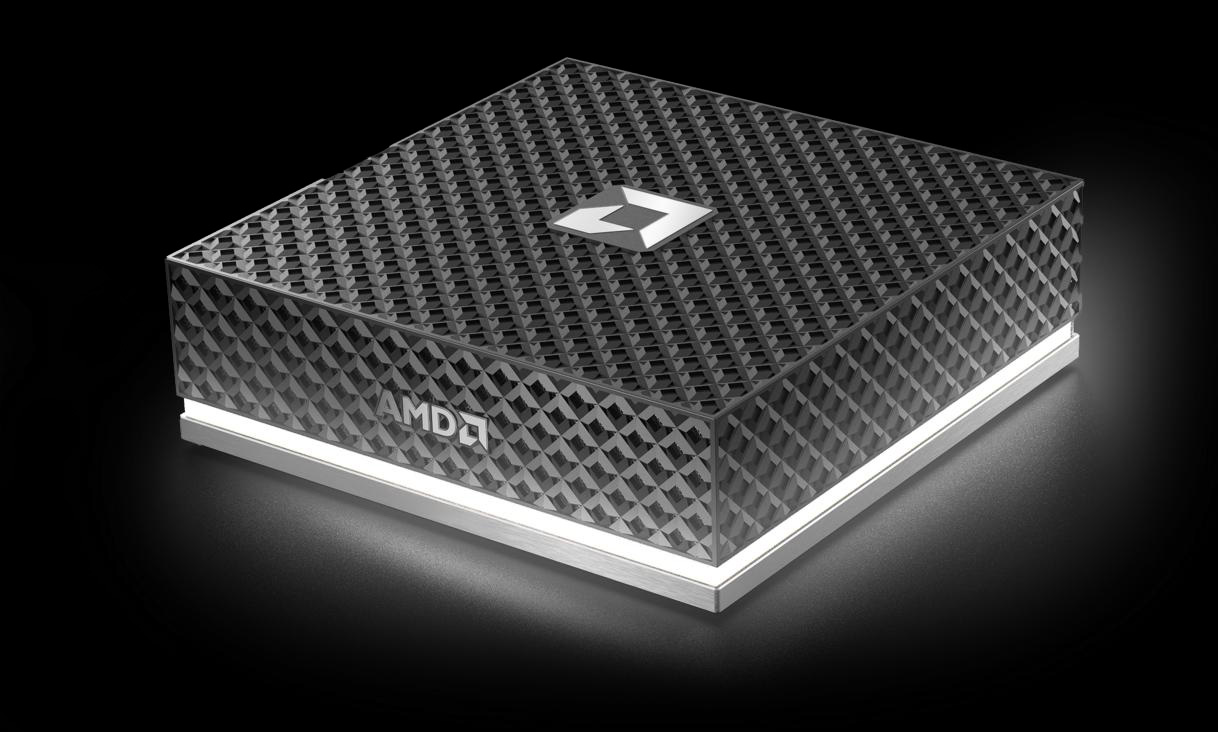
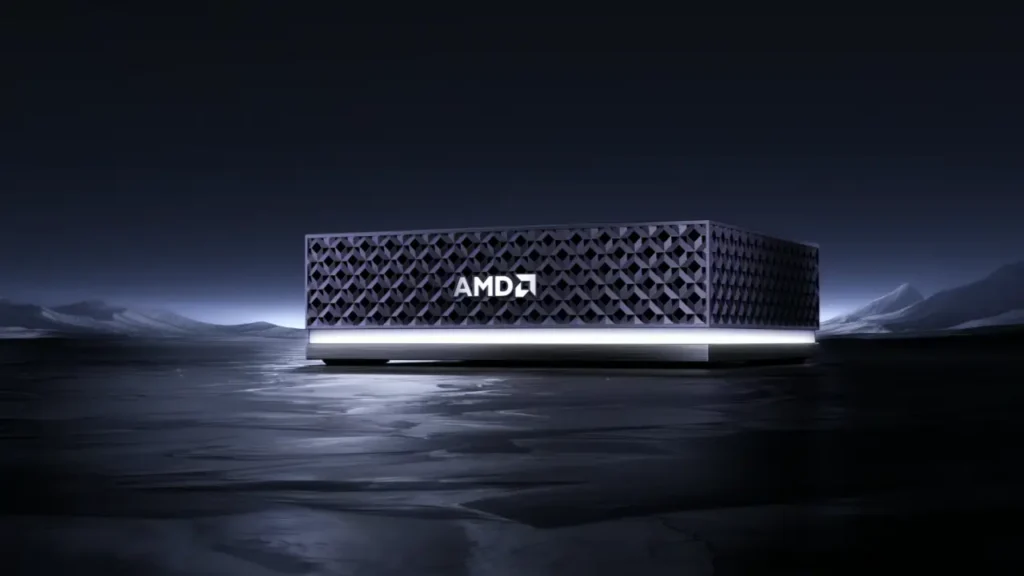
Physically, Ryzen AI Halo systems resemble compact mini PCs similar in size to the Mac mini.
That comparison is significant because Apple’s Mac mini has quietly become popular among hobbyist local AI users due to its own unified memory architecture and always-on efficiency.
AMD’s platform effectively doubles the memory ceiling currently available on many Mac mini configurations, potentially allowing significantly larger AI models to run locally.
The systems themselves will be manufactured by third-party hardware vendors using AMD’s reference platform.
High Price Limits Consumer Appeal
Pricing, however, remains a major barrier.
Entry-level Ryzen AI Halo systems are expected to start around $3,999, with higher-end Ryzen AI Max+ Pro 495 configurations likely costing even more.
AMD argues that businesses heavily dependent on cloud AI subscriptions could recover those costs relatively quickly by reducing recurring API fees and subscription expenses.
The company estimates the system could reach break-even within roughly six months for organizations currently spending hundreds of dollars monthly on cloud AI usage.
Local AI Gains Momentum Amid Rising Cloud Costs
The launch reflects a broader shift happening across the AI industry as providers including Google, OpenAI and Anthropic increasingly impose compute-based usage restrictions on advanced agentic AI features.
For consumers, platforms like Ryzen AI Halo may still be difficult to justify financially.
For developers, researchers and smaller enterprises, however, local AI hardware is increasingly being viewed as a way to avoid unpredictable subscription pricing, usage throttling and long-term dependency on cloud AI ecosystems.